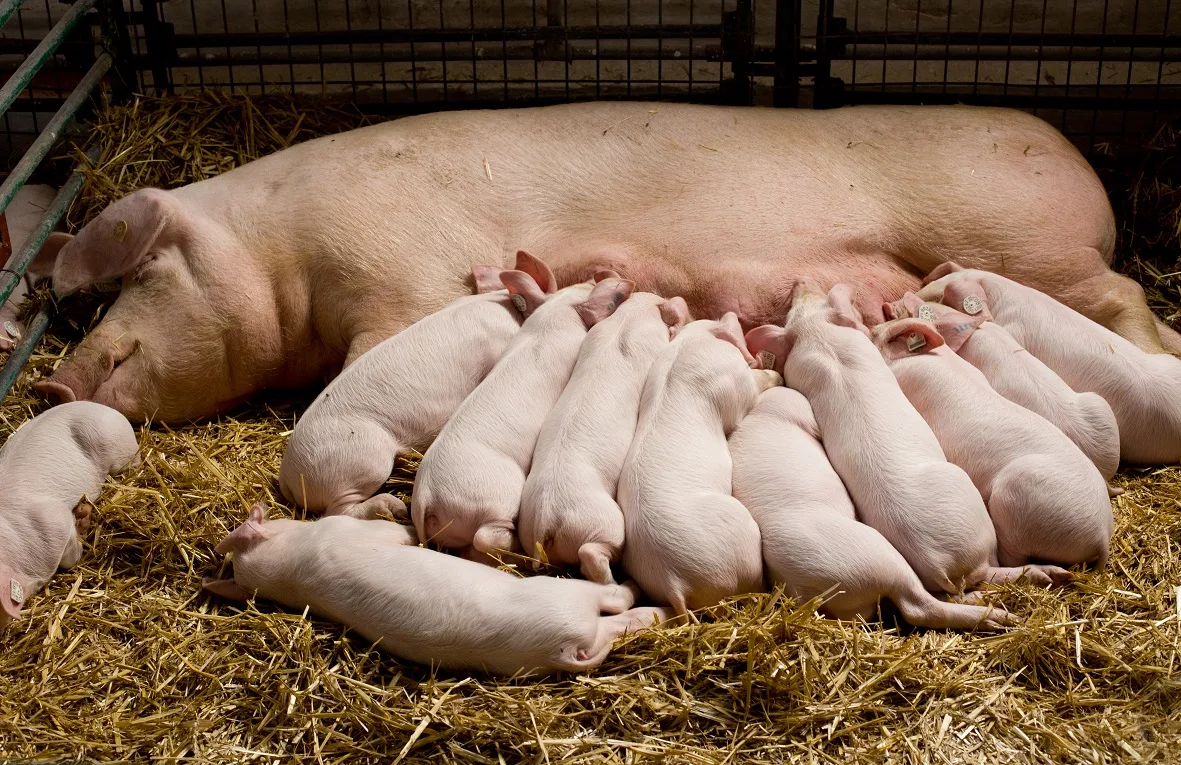
Sows represent the living capital of the farm.
Permanent progress in the number of newborn piglets has increased the risks of insufficient provision of nutrients and immunoglobulins to the newborn piglets. In the meantime, natural contamination with the germs from the sow shapes the future microflora of the pig with potential long-term impacts on health and resilience of the animals. After weaning, piglets are facing an immune depression leading to shedding of various pathogens such as Streptococcus suis. By focusing on sows and piglets C-Vita supports farms with a high Gram positive infection pressure.
Importance of sows
In most of the swine-producing countries, sows’ reproducing capacities currently reach or exceed 30 piglets/sow/year.
It is proven that in litters of more than 9-10 piglets, frequently observed with hyperprolific sows, provision of colostrum and milk per piglet decreases by at least 21%. Focusing on sows’ health and nutrition is indispensable to ensure adequate supply of good quality milk to the progeny to promote gut development, reduce sensitivity to inflammation and promote immune system maturation. This will result in better zootechnical performances all along production cycle of the pigs.
Protecting piglets
Pigs are a natural reservoir of Streptococcus suis, a bacteria that can become pathogenic under stressing conditions.
Because arthritis, meningitis and sudden death can occur rapidly, preventive solutions combining increased biosecurity and administration of veterinary treatments are generally set-up. In such a context, the natural solution C-vita can reduce the prevalence of Streptococcus suis in piglets and sows. This has to be preferred over the use of preventive antibiotics whose use should be mainly for treatment of clinical diseases.